Blog

Cutting the cloth of EPR textiles within the EU

Textiles are the next waste stream to get extended producer responsibility across the EU. Here’s what the revised Waste Framework Directive asks of producers, and where each Member State stands.

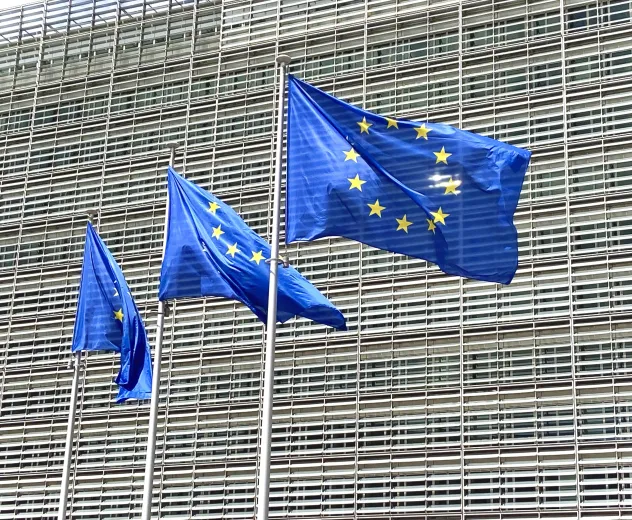
European flags fly before modern building facade 2026 09 24 08 13 53 utc

EPR for packaging, batteries and electrical and electronic equipment (WEEE) is now well established across the EU. Textiles are next. The latest revision of the EU Waste Framework Directive requires every Member State to set up an EPR scheme for textiles.

In this article we unpick what the revised Directive asks of producers, then map where each Member State stands, from France, which has had a scheme since 2007, to those still drafting their rules.

EU textiles EPR at a glance

Directive (EU) 2025/1892

Unpicking the revised Waste Framework Directive

The original Waste Framework Directive came into force in 2008. It set out the first obligations on waste producers to manage their waste correctly. In 2025 it was revised, with new rules on textile and food waste, through Directive (EU) 2025/1892 of the European Parliament and of the Council of 10 September 2025 amending Directive 2008/98/EC on waste.

For textiles, the revision does two things. It sets a waste hierarchy, so that textiles are prevented, prepared for reuse and recycled rather than thrown away. And it creates extended producer responsibility (EPR) for textiles: producers of in-scope products become responsible for their textile waste, including the cost of managing it. Each Member State will need a system for textiles like the ones already in place for packaging, batteries and WEEE.

  1. 2008Original DirectiveFirst obligations on managing waste
  2. Sep 2025Revision adoptedTextile and food waste rules added
  3. Apr 2028Schemes in placeDeadline for every Member State
  4. Apr 2029Micro-enterprisesExpected to come into scope

What’s in scope

The scope includes, but isn’t limited to, clothing and accessories (jeans, bags and similar goods), footwear and a range of household textiles.

  • Clothing
  • Accessories and bags
  • Footwear
  • Household textiles

Micro-enterprises get an extra year. Businesses with fewer than 10 employees and an annual turnover and balance sheet of no more than €2 million are currently expected to come into scope in April 2029, a year after everyone else.

Member States must make sure producers meet these EPR requirements for the textiles, textile-related products and footwear they make available on their market for the first time. That includes covering certain costs of collecting, transporting and sorting used textiles and textile waste, and preparing them for reuse, in each country.

Article 3

Who counts as a producer?

Article 3 of the Directive defines a producer as one of four types of business. You can be a producer in a Member State whether you’re based there, in another Member State or outside the EU.

  • Brands selling under their own name

    Based in the Member State and making, or having made, textiles sold there for the first time under its own name or trademark.

    “Established in a Member State and manufactures textile and textile-related goods under their own name or trademark or has them designed or manufactured and supplies them for the first time under this name or trademark within the territory of that Member State.”
  • Resellers under their own brand

    Based in the Member State and reselling goods made by others under its own name, where the maker’s name doesn’t appear.

    “Established in a Member State and resells within the territory of that Member State, under its name or trademark, the in-scope textile and textiles-related goods, that are manufactured by other economic operators, on which the name or trademark of other economic operators is not present.”
  • First suppliers into the market

    Based in the Member State and the first to supply goods there professionally from another Member State or from outside the EU.

    “Established in a Member State and supplies for the first time within the territory of that Member State on a professional basis, textile and textile-related goods from another Member State or from a third country.”
  • Distance sellers

    Based in another Member State or outside the EU and selling directly to end users in the Member State, for example online.

    “Sells textiles or textile-related goods by means of distance contracts directly to end-users, whether or not they are private households, in a Member State and is established in another Member State or in a third country.”

If you make textiles available in a Member State, under your own brand, as the first supplier or by selling online, you need to understand your obligations in each country where your goods are sold.

Your obligations

What producers will need to do

To monitor compliance, each Member State must set up a register of producers. Alongside registering, producers can join a textile producer responsibility organisation to manage their textiles in the countries where they operate.

  1. Check where you’re a producer

    Work out, country by country, whether you meet one of the four producer definitions, and track which Member States have a scheme in force.

  2. Register

    Register in each Member State’s register of producers, giving your name, the trademarks and brand names you trade under there, and your address and contact details.

  3. Join a scheme

    Join a producer responsibility organisation to make sure your textiles are managed properly in each country you sell in.

  4. Report and pay

    Report what you place on each market and pay towards the cost of collecting, sorting and preparing used textiles for reuse.

Member States

Where each Member State stands

With the Directive’s requirements unpicked, here is how seven Member States are implementing textiles EPR, starting with the oldest scheme, in France.

In force A scheme is runningDraft law Rules published in draftPreparing No draft law yet

France

In force since 2007
Law
Environment Code, Article L541-10-1
Scheme
Refashion (the only textiles scheme)
In scope
Clothing and accessories

France was the first Member State to bring in EPR for textiles, in 2007, through Article L541-10-1 of its Environment Code, which regulates extended producer responsibility. The scheme makes companies that place textiles and textile-related goods on the French market responsible for their textile waste.

It covers clothing placed on the French market, such as shirts, jumpers, denim trousers and waterproof clothing, plus accessories such as hats and gloves. Obligated companies include, but aren’t limited to, manufacturers, importers bringing in-scope goods into France, and online sellers and marketplaces selling directly to the French market. Companies should check the current rules to confirm their obligations under the Environment Code.

Obligated companies must register with Refashion, the only textiles scheme in France, and get their unique identifier. They then report the quantity of textiles they place on the French market and pay their financial contributions. Eco-modulation rewards companies that adopt sustainable eco-design practices with lower fees.

Netherlands

In force
Law
Decree of 14 April containing rules for extended producer responsibility for textile products
Scheme
Stichting UPV Textiel
In scope
Household textiles, consumer clothing and other textile products

The Netherlands put EPR for textiles in place through the Decree of 14 April containing rules for extended producer responsibility for textile products, with obligations applying from 1 January 2025. The scheme covers household textiles such as bed linen, consumer clothing such as shirts, and other textile products.

The main scheme is Stichting UPV Textiel, which helps producers and other parties meet their obligations. Companies that produce or import in-scope textiles onto the Dutch market for the first time must register with it, giving details such as their name and address. They must also report the quantity of textiles they place on the market and meet their financial obligations.

Latvia

In force
Law
Law on Waste Management, with a natural resources tax
Scheme
Latvijas Zaļais punkts
In scope
Clothing, footwear, home textiles and accessories

Latvia regulates textiles through its Law on Waste Management, which includes a natural resources tax designed to encourage more efficient use of resources. The main scheme is Latvijas Zaļais punkts.

Clothing, footwear, home textiles and accessories are all in scope. Companies can meet their obligations by joining a compliance scheme, such as the main scheme, and signing an agreement with it. They then report the types of textiles they place on the market and contribute financially to managing textile waste.

Companies should review the rules currently in force to confirm their obligations under Latvia’s scheme.

Italy

Draft decree
Draft law
Draft decree establishing EPR for clothing, footwear, accessories, leather goods and home textiles
Consultation
Ran in 2025
In scope
Clothing, footwear, accessories, leather goods, home textiles and mattresses

Italy has yet to bring in EPR for textiles. The Ministry of the Environment and Energy Security (MASE) has published a Draft decree for the establishment of the extended producer responsibility scheme for the textile products supply chain of clothing, footwear, accessories, leather goods, and home textiles. A consultation ran in 2025, but when the decree will take effect is still to be seen.

The draft would transpose the Directive by creating an EPR scheme for clothing, footwear, accessories and leather goods, with mattresses added. Producers and other in-scope businesses would need to manage and make sure of the collection of their textile waste, register in a national register of producers, report on the textiles they place on the Italian market and pay an environmental contribution.

Companies should get to know the main requirements now and follow the decree’s progress.

Spain

Draft royal decree
Draft law
Draft Royal Decree regulating textile and footwear products and their waste management
In scope
All textile and footwear products placed on the Spanish market
Also requires
Prevention and eco-design plans

Spain doesn’t have an active textiles scheme yet, but has laid the groundwork with its Draft Royal Decree regulating textile and footwear products and their waste management. It would set out prevention and reduction measures, registration and reporting requirements, eco-design plans and a national register of producers.

All textile and footwear products placed on the Spanish market would be in scope, including clothing such as t-shirts and jeans and accessories such as bags and headwear. Producers would need to register in the national register and join an approved textiles scheme. Once the decree is in force, they will report every year, following a route to compliance similar to other Member States.

Certain producers will also need to draw up and carry out business prevention and eco-design plans, with measures to reduce the environmental impact of their textile and footwear products. Companies should follow the draft decree and watch for when the key requirements start to apply.

Germany

Preparing
Status
Paper published on the key requirements for transposing the Directive
Likely scope
Clothing, accessories such as bags, home textiles such as bed linen, and footwear

Germany has not yet brought in EPR for textiles, but has started work on it, publishing a paper that sets out the key requirements for transposing the Directive.

Once in place, the scheme is likely to cover clothing, similar accessories such as bags, certain home textiles such as bed linen, and footwear. Its requirements will probably resemble those in other Member States, so companies should follow developments to be ready for registration, reporting and anything else required.

Sweden

Preparing
Today
Textile waste collected separately, with collection targets
Next
National rules expected in 2027, with a system in early 2028

Sweden already requires textile waste to be kept separate from other waste streams, with collection targets in place. According to the Swedish Environmental Protection Agency, Sweden must adopt national rules implementing the Directive during 2027. On that timeline, a national system would start in early 2028, likely set up in a similar way to other Member States.

Companies should get to know the current requirements and keep an eye on the timeline for the Swedish rules.

Conclusion

What to do now

France, the Netherlands and Latvia already have textiles EPR in force, and every other Member State must follow by April 2028. Companies should get to know the requirements in force today and those coming next.

  1. Map where you sellList the Member States where you make textiles, textile-related goods or footwear available, including by selling online.
  2. Check whether you’re a producer in eachUse the four definitions in Article 3 of the Directive.
  3. Register and report where schemes are in forceFrance, the Netherlands and Latvia today.
  4. Track the countries still to comeItaly and Spain have draft laws; Germany and Sweden are preparing theirs.
Talk to us about textiles EPR

How Ecoveritas can help

The rapid rate at which EPR regulations are evolving can be frustrating for businesses that seek to make sense of how they might be affected by a potential law. Ecoveritas has and will continue to keep track of and interpret EPR regulations, along with other environmental laws impacting packaging, textiles, electricals, batteries, and wider sectors. Our exclusive Global EPR Matrix offers a unique insight into EPR laws that should educate you about your business's obligations.

Get in touch with us today to learn more about our services. Please speak to one of our advisors on +44 (0)1865 502176 or email us at info@ecoveritas.com.